PRE-PURCHASE INSPECTION
0/33 checked
Tap a mark on each line. Unchecked lines print blank so the sheet works on a clipboard too.
PAPERWORK AND IDENTITY
- VIN on dash matches VIN on door jamb and title
- Title status — clean, salvage, rebuilt, lemon
- Odometer reading against service records
- Open recalls
- Service history present and plausible
- Number of prior owners
STRUCTURE AND BODY
- Panel gaps even, both sides
- Paint thickness and colour match across panels
- Overspray on trim, seals or under the bonnet
- Frame rails and strut towers — kinks, welds, sealant
- Underbody rust — surface or structural
- Flood signs: silt, waterline, musty smell, corroded connectors
- Boot floor and spare well
POWERTRAIN
- Cold start — noise, smoke, time to fire
- Oil condition and coolant cross-contamination
- Coolant condition and pressure test
- Transmission shift quality, cold and warm
- Clutch bite point (manual)
- Timing belt or chain — service record or condition
- Exhaust smoke under load
- Stored and pending fault codes, plus readiness monitors
CHASSIS AND CONSUMABLES
- Brake pad and rotor life remaining
- Tyre brand match, tread and DOT dates
- Shock or strut leaks
- Steering play and alignment pull
- Suspension noise over bumps
- Air conditioning vent temperature
ROAD TEST
- Straight-line tracking hands-off
- Braking — pull, pulse, noise
- Full-throttle acceleration through the gears
- Highway speed vibration
- All warning lights out after start
- Cruise, wipers, windows, locks, infotainment
Inspected by
Signature ______________________
- OK
- 0
- Watch
- 0
- Walk
- 0
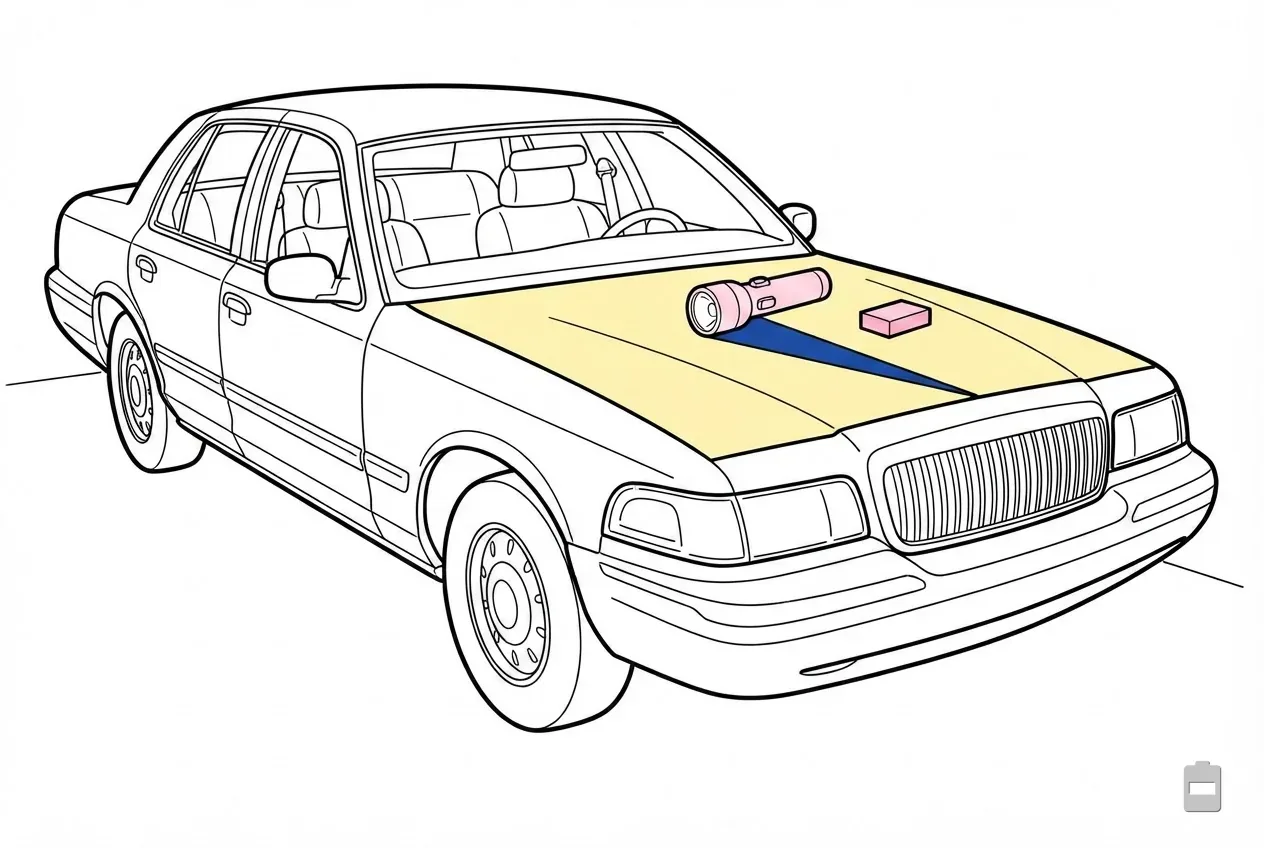
What belongs in the Walk column
Structural repair to the frame rails or strut towers. Flood evidence. A VIN that does not match, or a title status the seller did not disclose. Coolant in the oil. These are not negotiating positions — they are reasons the car is not the car being sold, and no discount makes them into a good purchase. Coolant in the oil points at the engine itself; the engine repair cost guide shows what that job can turn into. For a car already owned, the same arithmetic runs the other way on the repair-or-replace calculator.
Everything else is a number. Worn brakes, tired struts, a due timing belt: those are repricing items, and the quick-reference card puts a figure on each so the buyer can negotiate with an amount rather than a feeling.
The readiness-monitor trick
A scan that shows no stored codes but several incomplete readiness monitors usually means the battery was disconnected or the codes were cleared recently — often within the last few dozen miles. It is the single most useful thing a scan tool tells you on a pre-purchase inspection, and it takes thirty seconds. See check engine light codes for how the monitors work.
Insist on a cold start
A seller who has the engine warm when you arrive has hidden the most informative thirty seconds of the inspection. Cold-start noise, smoke colour, and how long the engine cranks before it fires say more about internal condition than an hour on a lift.
Who should run it
A buyer can work through the paperwork, body and road-test sections alone. The powertrain and chassis sections want a lift and a scan tool. If you are a shop offering this as a service, price it as diagnostic time on the diagnostic fee calculator — it is an hour of skilled labor, not a favour. If the car passes and needs work anyway, the multi-point sheet is the follow-up.
WHAT A MISS COSTS
- Inspection fee
- $80–$250 per diagnostic test
- Timing belt
- $887–$1,302
- Catalytic converter
- $2,283–$2,473
- Transmission replacement
- $2,500–$6,000 for a replacement
- Struts, all four
- $1,000–$5,000 for all four
An inspection costs about one hour. Missing any one of the rows below costs more.