MULTI-POINT INSPECTION
0/36 checked
Tap a mark on each line. Unchecked lines print blank so the sheet works on a clipboard too.
UNDER THE HOOD
- Engine oil level and condition
- Coolant level and freeze point
- Brake fluid level and moisture
- Power steering fluid
- Washer fluid
- Battery terminals, state of charge, date code
- Drive belt condition and tension
- Hoses — soft spots, chafing, weeping
- Engine air filter
- Visible leaks — oil, coolant, fuel
BRAKES AND TYRES
- Front pad thickness (mm)
- Rear pad or shoe thickness (mm)
- Rotor thickness against discard spec
- Caliper slides and boots
- Brake lines and hoses
- Parking brake operation
- Tread depth, all four (32nds)
- Tyre pressures, including spare
- Uneven wear pattern
- DOT date codes
- Wheel torque re-check
STEERING AND SUSPENSION
- Shocks or struts — leaks, bounce
- Ball joints and tie rod ends
- Control arm bushings
- CV boots
- Wheel bearings
- Exhaust hangers and joints
LIGHTS, GLASS AND CABIN
- Headlights, high and low
- Brake lights and third light
- Indicators and hazards
- Reverse lights
- Wiper blades and washer jets
- Windscreen chips and cracks
- Horn
- Cabin air filter
- Warning lights at key-on and running
Inspected by
Signature ______________________
- OK
- 0
- Watch
- 0
- Fail
- 0
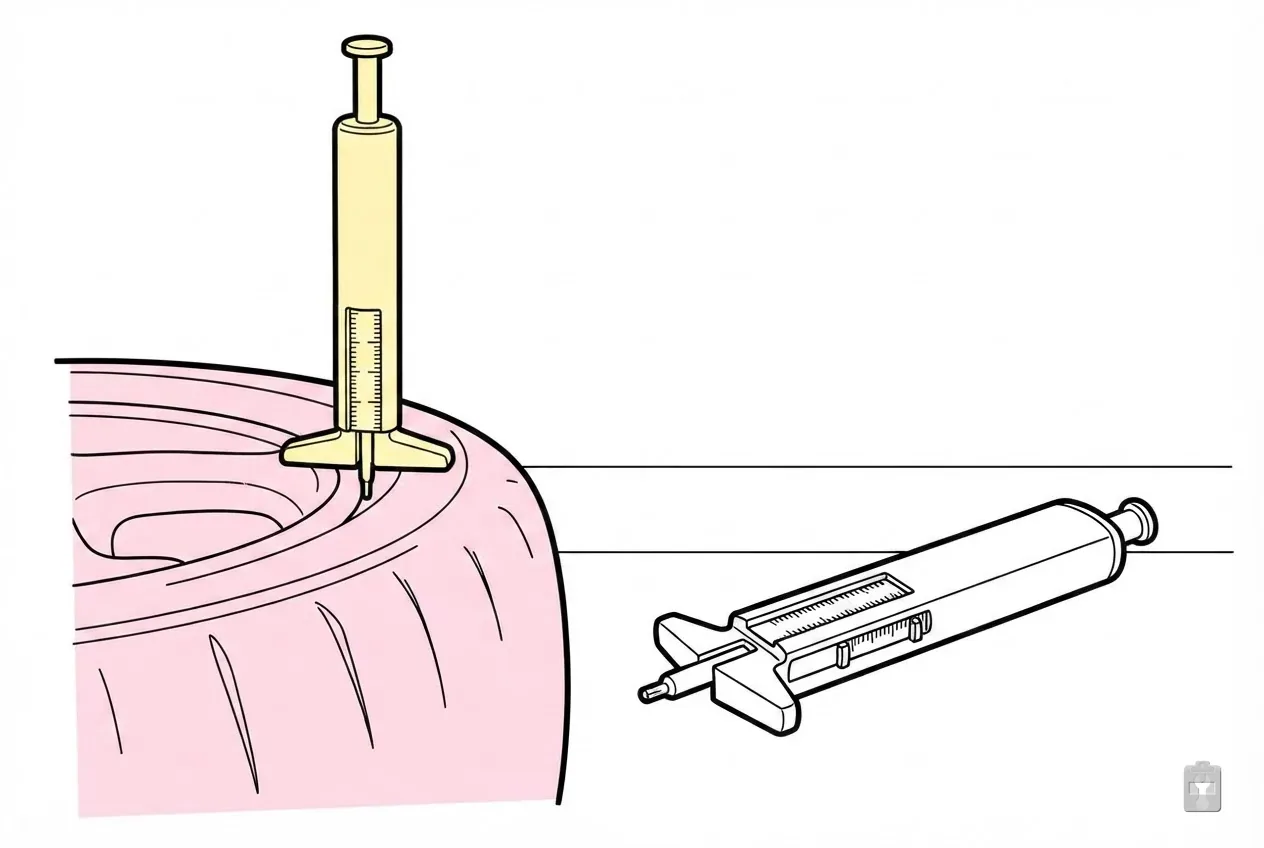
A number beats an adjective
“Brakes low” is an opinion. “Front pads 3 mm, rear 6 mm, front rotors 20.4 mm against a 22 mm discard” is a finding. The first invites an argument; the second ends one, and it is still true in six months when the customer comes back.
The notes field exists for exactly this. Everything you measure goes there, and it goes onto the repair order in the cause column. A strut leak or a cupped tyre is a suspension quote, not a note.
Three marks, not two
Pass and fail is a binary that hides everything useful. The middle mark — watch — is where most of an inspection actually lives: pads at 5 mm that will be at 3 mm by the next service, a tyre at 4/32nds, a belt starting to glaze. Marking it is how you get to have the conversation before the part fails, and it is the record that protects you when the customer declines.
Handing it over
Pair it with a service card for the next 30,000 miles. Print two copies: one for the customer, one for the file. Anything marked watch or fail that the customer declines belongs in the declined column of the repair order with their initials. That is the whole discipline, and it takes two minutes.
The buyer’s version
A pre-purchase inspection asks different questions — history, structure and deal-breakers rather than service intervals — so it is a separate sheet: the pre-purchase checklist. Both print the same way.
MEASURE, DO NOT ESTIMATE
- Pad thickness
- record in mm, not 'low'
- Rotor
- measured against discard spec
- Tread
- 32nds at three points across
- Rotation interval
- every 5,000–8,000 miles or every six months
- Oil interval
- every 5,000–7,500 miles
- Pads, per axle
- $150–$600 per axle, pads only